Heritage Interior Design In Rajasthan: Colours, Motifs, Craft & Materials Explained
Step into an old Rajasthani haveli, and the room speaks before you do. Here's a plain-English guide to what you're looking at, how it was made, and how to bring it home.
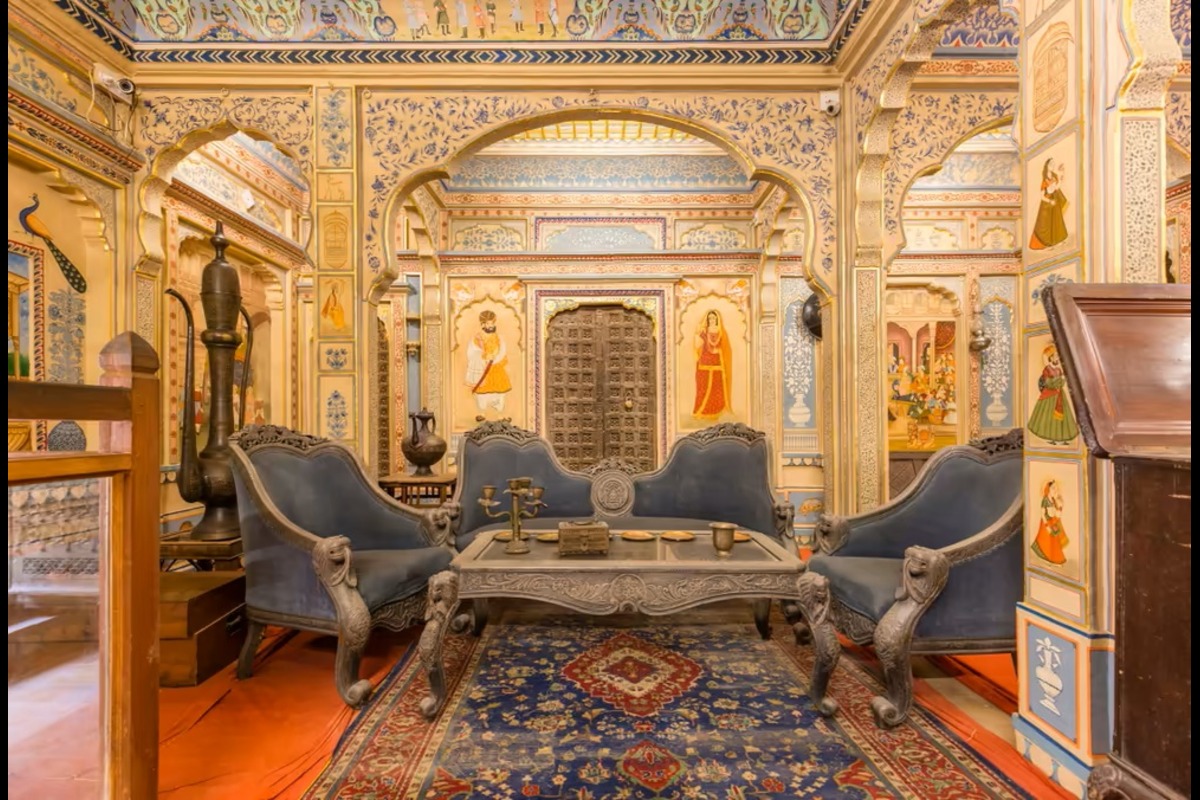
Stand in the courtyard of a 200-year-old haveli in Shekhawati or Jaipur's old city, and something happens. Your voice drops. You look up. The walls hold you there with painted peacocks, mirror chips and carved stone. That feeling is the whole point of heritage haveli interior design.
It isn't about stuffing a room with antiques. It's about understanding why Rajasthani spaces look the way they do, then using that logic well. So, let's break it down: colours, motifs, craft and materials.

The Colours That Say "Rajasthan"
Rajasthan's palette wasn't picked from a mood board. Most of it came from the land itself.
Ochre and sandstone yellows come straight from the desert. Terracotta and brick red came from local clay. Indigo, the blue you see all over Jodhpur, was both a dye and a practical choice, since people believed it kept insects away and rooms cooler. Pink, of course, gave Jaipur its nickname after a royal welcome in the 1870s.
Then there's the jewel stuff. Deep emerald, ruby red and peacock blue show up in textiles, glass work and miniature paintings. Gold leaf ties it all together, usually in small, careful doses.
A few tips if you're picking colours:
- Pair one bold wall colour with warm neutrals. Don't paint every wall loud.
- Use jewel tones in cushions, curtains and rugs, where they're easy to change.
- Keep ceilings pale or softly painted. Old havelis often had floral ceilings, and they still look gorgeous.
Colour in these homes also carried meaning. Red and yellow stood for celebration and prosperity. White and soft greens brought calm. Good designers still think this way.
Motifs: Reading the Walls
Every pattern in a Rajasthani interior has a reason to be there. Once you learn a few, you can't stop noticing them.
The peacock is everywhere, for good reason. It stands for beauty, rain and good fortune. Lotus flowers suggest purity. Elephants bring strength and royal status. Paisley (the mango shape) means abundance. And the jharokha, the carved overhanging window, is as much a motif as an architectural feature.
You'll also see geometric patterns, especially in jaali screens. These carved lattices cooled the air, gave women privacy and threw beautiful shadows across the floor. Smart design, hundreds of years before anyone said "passive cooling."
Frescoes deserve their own mention. In Shekhawati, merchants covered their havelis with painted scenes: gods, trains, horse-drawn carriages, even early cars. It's like a storybook you can walk through. Restoring these takes real patience, which is why heritage property restoration is a specialist job rather than a regular paint-and-polish one.

Why Traditional Rajasthani Interior Designers Still Work with Karigars
Here's the thing most people miss. A lot of this style lives in people's hands, not in catalogues.
Traditional Rajasthani interior designers work with karigars, the skilled artisans whose families have practised the same craft for generations. Many of these crafts are genuinely rare now.
- Meenakari is the art of fusing coloured enamel onto metal. It shows up in doors, frames and decorative panels.
- Thikri work uses tiny mirror pieces set into plaster, so a room sparkles by candlelight.
- Pichwai and miniature painting bring fine detail to walls and panels.
- Blue pottery is a Jaipur speciality, glazed in cobalt and turquoise, and gorgeous as tiles or accent pieces.
- Block printing and bandhani give you textiles with real character.
- Stone and wood carving turn pillars, brackets and doors into small sculptures.
A mirror-work panel can take weeks. A carved door can take months. You can't rush it, and that's exactly why it feels different from factory-made decor. Every piece has tiny quirks, and those quirks are the charm.
If a designer tells you everything can be ready in two weeks, ask where the craftsmen are coming from.
Materials That Age Beautifully
Rajasthani interiors lean on materials that handle heat, last for decades and look better with age.
Stone first. Jaisalmer yellow sandstone, Makrana white marble (the same family as the Taj Mahal's), Kota stone for floors and red sandstone for carved details. Kota stone is a favourite because it stays cool underfoot and is tough enough for heavy foot traffic.
Lime plaster is the old-school wall finish, and it's making a comeback. Unlike cement, it lets walls breathe, which matters a lot in old buildings. Using cement on a heritage wall is one of the most common and damaging mistakes in restoration.
Wood matters too. Teak, sheesham and rosewood were used for doors, ceilings and furniture, usually carved by hand and finished with natural polish.
Brass, copper and silver appear in hardware, lamps, trays and inlay. Glass and mirror bounce light around dark corners. Textiles like silk, cotton and velvet, often with zari embroidery, soften all that hard stone and wood.
There's real logic in the mix. Hard, cool surfaces below. Soft, rich fabrics at hand level. Light-catching details above. It works in a 1700s palace, and it works in a modern flat too.

Heritage Furniture and Interior Design: Getting the Furniture Right
Furniture is where many people trip up. They either buy cheap lookalikes that feel fake, or they overdo it until the room feels like a museum.
True heritage furniture and interior design is about restraint. Think of a few strong pieces, not a crowded showroom.
- A carved wooden jharokha-style window seat or a low diwan with bolsters for lounging.
- A chaupar or bajot table (low and traditional) for tea or dinner.
- Painted or inlaid almirahs and chests, ideal for storage.
- Brass-studded doors and carved wooden screens as room dividers.
- Charpai-style daybeds, reimagined with cushions, for a relaxed corner.
Mix old with new, too. A restored carved cabinet looks stunning next to a clean-lined sofa. The old piece gets room to breathe, and the modern one keeps things comfortable. It's what keeps luxury heritage interior design feeling elegant rather than stuck in the past.
Working on a Haveli? Read This First
Maybe you've bought an old haveli, or you're lucky enough to have inherited one. Before you pick paint colours, understand the bones of the place.
Good haveli interior designers start with a survey. Which walls are load-bearing? Where is the damp coming from? Which frescoes can be saved? What can be reused instead of replaced? Skipping this step is how owners end up with expensive mistakes.
When you hire haveli renovation contractors, ask a few direct questions:
- Have they worked on lime plaster and traditional masonry before?
- Do they have in-house or trusted karigars for carving, painting and metalwork?
- Can they show you past heritage projects, not just new builds?
- Will they document the original features before touching anything?
The same thinking applies to hospitality. Heritage hotel interior design has its own challenge: keep the old soul, but add modern plumbing, wiring, air-conditioning and safety. Guests want authenticity, and they also want hot water. A good team knows how to give both without ruining either.
And if you're in the city, working with heritage interior designers in Jaipur gives you an edge. They know the local craft clusters, the suppliers and even the quirks of the old walled-city buildings, which saves time and money.
Bringing It into a Modern Home
You don't need a palace to do this. A few smart choices can carry Rajasthani character into a flat or an office.
Start with one anchor. That might be a carved door, a hand-painted wall panel, a pair of brass lamps or a handloom rug. Build around it. Keep the rest calm.
Layer textures: stone underfoot, lime or clay-toned walls, rich fabrics, a touch of brass. Use light well, because those mirror and jaali details need it. And don't be afraid of empty space. Old Rajasthani rooms were often surprisingly open, with a few beautiful things placed with care.
The golden rule? Choose fewer, better things, and make sure they were made by someone who knows what they're doing.
Ready to Bring Rajasthan Home?
Whether you dream of a restored haveli, a calm apartment with royal touches or a corporate office with real character, the right team makes all the difference. Our dedicated interior design division at FortinRajasthan offers end-to-end heritage interior design for luxury residences, apartments and modern corporate offices, from the first sketch to the final carved detail.
Get in touch with FortinRajasthan today and let's talk about turning your space into something people remember.