Hiring Haveli Interior Designers in India: What All To Look For
Pretty mood boards are easy. Designing for a building with thick walls, old lime and a hundred stories is not. Here's how to find someone who can.
Picture this. A designer walks into your family haveli, glances at the painted ceiling and says, "We could cover that with a nice false ceiling."
Show them out. Politely.
Good heritage interior design starts with what's already there. The haveli interior designer in India studies the arches, the niches, the courtyard light, and how your family wants to live. Only then do the sofas and swatches come in.
The short answer: look for a designer with finished work in old buildings, a working knowledge of traditional materials, a clear plan for wiring and plumbing, and a written fee. They should also be happy to work alongside your conservation architect and masons.

Why Haveli Interior Design Needs a Different Kind of Designer
A new flat is a blank box. A haveli is anything but.
Rooms open into other rooms. Walls can be very thick and rarely perfectly straight. Windows are often low, so you can sit beside them and watch the street. The courtyard pulls in light and air, and the whole house is arranged around it.
Someone used to modern apartments may try to "fix" all of this. They'll square off the corners, close the niches and install big wardrobes across a lovely arched wall. The room works on paper. It just doesn't feel like your house anymore.
The right designer treats these quirks as the starting point. That deep niche becomes a reading spot or a display shelf. The long, narrow room becomes a dining hall. Nothing gets flattened for the sake of convenience.
They'll also ask about you before they talk about style. Who sleeps where? Do elderly parents need to avoid steep stairs? Is this a weekend home, a daily home or a future guesthouse? If nobody asks, the design is probably coming off a shelf.
How to Read a Designer's Portfolio
Don't fall for the first golden-hour photo. Look closer.
- Real old buildings. A new villa with a few carved doors isn't the same thing as a century-old home.
- Before and after pictures. You want to see what was kept, not only what was added.
- Daily-life spaces. Courtyards photograph well. Ask to see a kitchen, a bathroom and a storage wall.
- Their exact role. Did they design the whole project, or just style two rooms?
- Age of the work. A project finished a few years ago tells you how it has held up.
Then visit one if you can. Stand in a room and notice small things. Is there damp near the floor? Do the switches sit awkwardly on a carved surface? Does the furniture leave the arches room to breathe?

Do They Understand Haveli Restoration?
Your designer doesn't have to carve stone. They do need to know what not to damage.
Many older havelis were built with lime and local stone, and those walls need to breathe. Cement patches and plastic-based paints can trap moisture. A designer who suggests them, or pins wooden panelling against a damp wall, is setting you up for repairs.
Check whether they can handle these:
- Working with a conservation architect on heritage property restoration, from the first survey onwards
- Choosing lime washes, natural pigments and finishes that suit old surfaces
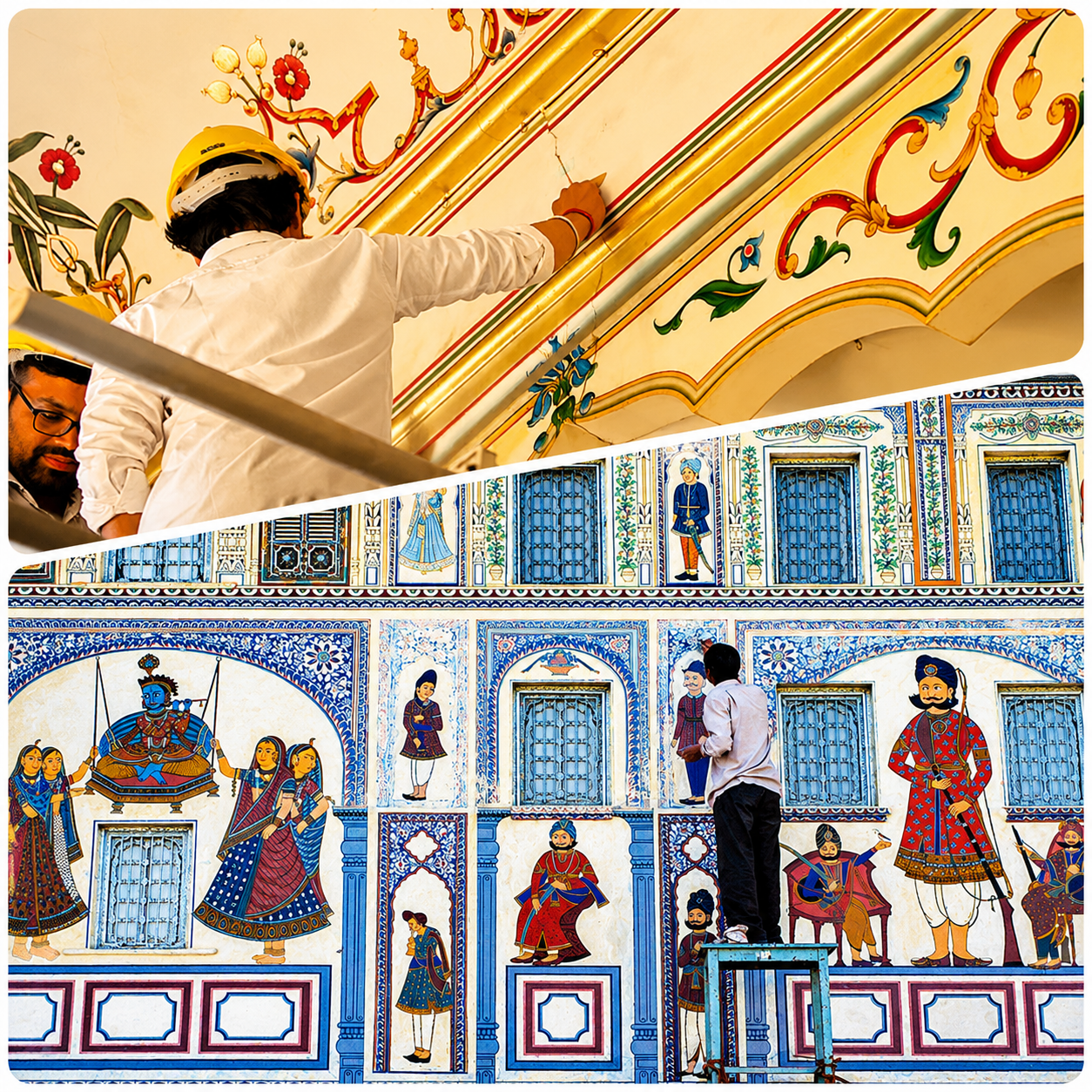
- Protecting frescoes, mirror work and carved wood while work is going on
- Telling you honestly what can be repaired and what has to be replaced
- Checking whether your property needs any heritage or municipal approvals
Planning Modern Haveli Interiors You Can Actually Live In
Let's be real. You love the old charm, but you also want hot water and decent Wi-Fi.
Good design gives you both. Ask where the air-conditioning pipes will run. Ask how Wi-Fi will get through those thick walls. Ask where the geyser, the inverter and the water tank will hide. A designer with experience will start sketching routes. A beginner will say, "We'll see on site."
Furniture matters just as much. Huge, glossy pieces can swallow a delicate room. Lower seating, solid wood, cane, brass and handwoven textiles usually sit more naturally. You don't need every chair to be an antique.
Light can make or break it. Skip the rows of harsh ceiling spots. Wall lamps, floor lamps and gentle uplighting show off carvings without drilling into them.
Then there's the Rajasthan climate. Hot summers and a heavy burst of monsoon affect what lasts. Ask how fabrics, timber and wall finishes will cope in April and again in August.
Great heritage interior design doesn't shout. You walk in, feel comfortable, and only later notice how much thought went into it.

Questions to Ask at the First Meeting
- What would you leave completely untouched in this house, and why?
- Which craftspeople will you bring in, and have you worked with them before?
- How will you create modern heritage interiors without hiding the original details?
- Who visits the site, and how often?
- What will I get in writing before work starts?
- What happens if we discover old paintwork or a sealed doorway halfway through?
Fees, Scope and the Fine Print
Designers charge in different ways. Some bill by the square foot. Some take a percentage of the project cost, and others quote a flat fee. None of these is automatically better. What matters is knowing what's inside.
Ask for a written scope that spells out:
- Drawings and 3D views, and how many revisions you get
- Whether site supervision is included
- Who buys materials and furniture, and whether there's a markup
- Payment stages linked to finished work
- Custom pieces and their expected delivery times
Ask for samples too. A lime finish or a fabric can look lovely on a screen and quite different in your courtyard light. Have a small patch done on site, live with it for a few days, then decide. It's far cheaper than redoing a whole room.
Red Flags You Shouldn't Ignore
Some signs are hard to miss. Walk carefully if a designer:
- Quotes without seeing the property
- Shows only digital renders and no finished rooms
- Wants to repaint old carvings or frescoes to "freshen them up"
- Pushes the same royal theme for every client
- Gets vague when you ask about money
Not every haveli wants deep red walls and gold trim. A good designer listens to the building first.

Ask What Happens After Handover
The last cushion is in place. The photos look great. Now someone has to look after it all.
A thoughtful designer plans for that from day one. Ask how to clean the stone floors, what to avoid on lime walls and how often the woodwork needs attention. Get it written down in plain language, so whoever manages the house can follow it.
Also ask for the names of the craftspeople and suppliers, plus a record of paint shades, fabrics and fittings. A chipped corner is much easier to fix when you know who made it and what went into it.
Finally, agree on a check-in after the first monsoon. That's often when small problems show up, like a damp patch, a swollen shutter or a fabric that isn't coping. Catch them early, and they usually stay small.
Quick FAQs About Hiring Haveli Designers
Do I need an interior designer and a conservation architect?
Often, yes. The architect looks after the structure and original fabric. The designer shapes how the rooms look and work. Bring both in early, so they plan together.
When should the designer join the project?
Before repair work begins. Wiring routes, bathroom locations and lighting points are much easier to settle than after fresh plaster has gone up.
Can an old haveli have a modern kitchen?
Usually, it can. Freestanding units and carefully placed services let you cook comfortably while limiting cuts into old walls. Ventilation and drainage need checking first.
Your Haveli Deserves More Than a Makeover
Choosing a heritage interior designer in Rajasthan or India comes down to trust. Look at real work, ask direct questions and notice who listens. Your house has been around a long time. It can wait while you pick well.
Ready to talk about your space? FortinRajasthan works hand in hand with its interior design division to take care of your heritage interior design from start to finish, whether it's a luxury residence, an apartment or a modern corporate office. Get in touch with our team, tell us about your property and let's plan what comes next.