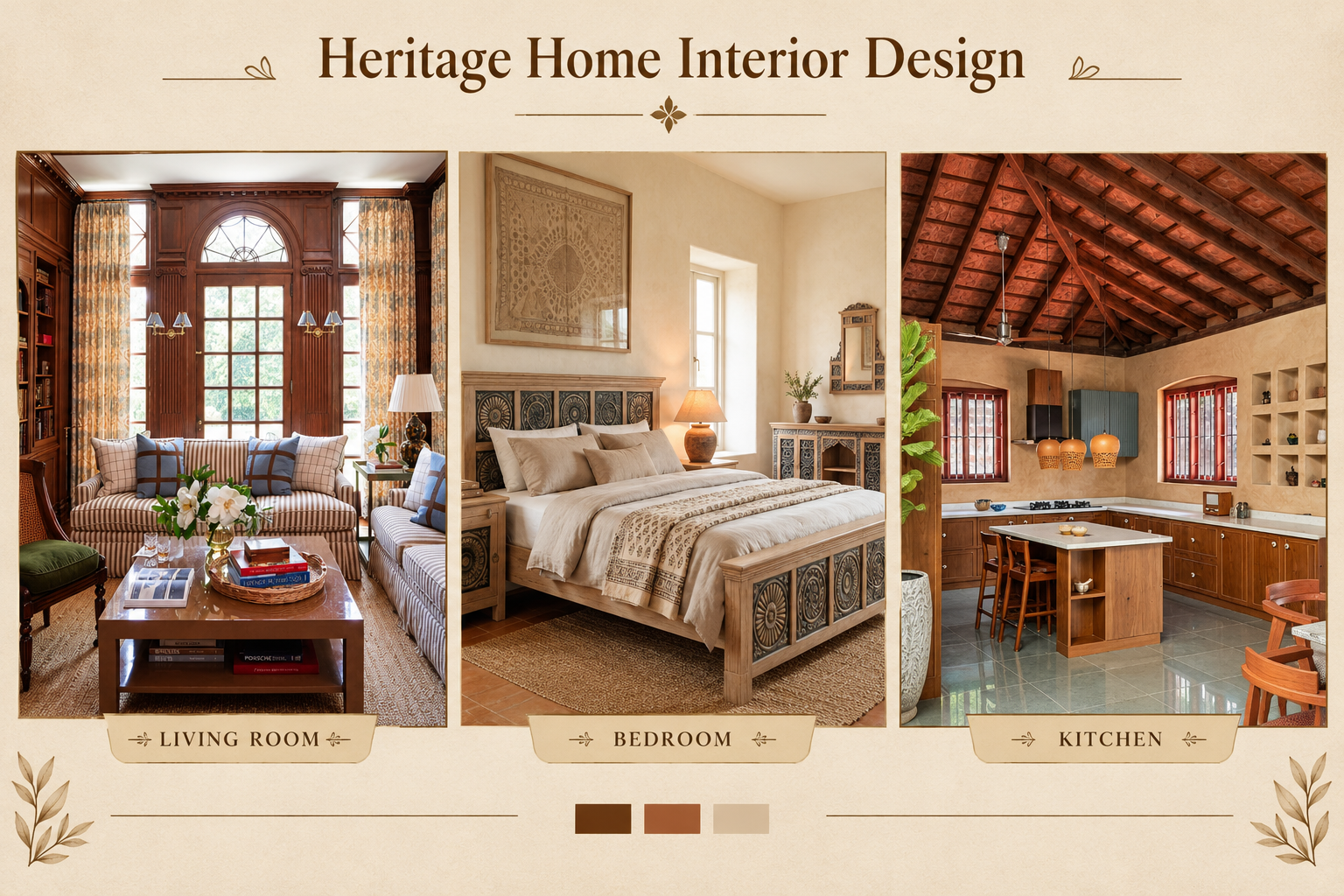
Heritage Interior Design Room By Room: Keep The History, Lose The Museum Feel
Your home's walls hold stories. Here's how to honour them in every room while still living comfortably in 2026.
Some homes hit you the moment you walk in. A lovingly kept haveli or an old bungalow does exactly that. The air is calmer. The proportions feel right. Every corner seems to have been thought about by someone who cared. Now walk into a home where "heritage" was ticked off a checklist. Carved furniture lined up like exhibits, velvet ropes missing only by luck. Beautiful? Sure. Livable? Not really.
That gap is what heritage interior design is all about. Done well, it protects the character of a place while making it work for the people who actually live there. Let's go through the house, one room at a time.
What Heritage Interior Design Really Means

Forget the idea that it's about filling a house with antiques. It's about respect.
You respect the architecture first: the arches, the jharokhas, the thick walls, the high ceilings, the old stone floors. Then you respect the craft: hand-block prints, brass work, carved wood, lime plaster, jaali screens. Everything else is a supporting act.
Searches in 2026 tell the same story. People aren't typing "antique decor" anymore. They want homes that feel rooted and personal, made with real materials, with a bit of soul. Mass-produced "vintage look" pieces don't cut it, and buyers can smell them from a mile away.
A simple rule helps: keep what's original, repair what's tired, and add only what earns its place.
The Living Room: Let the Bones Lead
This is where most people go wrong, because it's the room everyone sees first.
Start with what the room already gives you. A carved ceiling? Light it properly and leave it alone. Old jaali windows? Don't hide them behind heavy curtains. Stone or Kota floors? Strip the dull carpet and let them shine.
Then furnish for real life. Pick one or two statement heritage pieces, say an old carved chest used as a coffee table or a vintage jharokha mirror, and pair them with deep, comfortable sofas in plain, earthy fabrics. Sit on it. If you'd never relax on it, it doesn't belong.
A few quick moves that work:
- Warm, layered lighting instead of one harsh ceiling light
- Handwoven dhurries or rugs to soften hard floors
- Fresh flowers or brass urns, not a pile of showpieces
- Plenty of empty wall. Heritage rooms need room to breathe.
The Kitchen: Where Old Meets Everyday

Kitchens in old homes were never built for air fryers and dishwashers. That's the challenge, and it's also the fun part.
The trick is to hide the modern and show the character. Tuck appliances behind wooden shutters or panelled doors. Use handmade tiles or a hand-painted backsplash as the star. Choose brass or copper handles over shiny chrome. Marble or Kota stone counters age beautifully and look right at home.
If the original kitchen was tiny, don't be afraid to open it up. A smart layout beats strict loyalty to the old floor plan. What matters is that the finishes, the colours and the textures still speak the same language as the rest of the house.
Open shelving with clay pots, steel thalis and old copper vessels also does a lot of work. It's decor and storage in one go.
The Bedroom: Quiet Layers, Not Loud Statements

A bedroom should help you switch off. So go easy.
Start with a solid wooden bed, maybe a four-poster or one with simple carved detail. Add soft cotton bedding, a hand-block printed bedspread, and a couple of cushions in muted tones. Keep the palette warm: ivory, sand, terracotta, deep green.
This is where heritage home interior design really pays off, because small touches carry the whole mood. An old trunk at the foot of the bed. A brass lamp on the side table. A framed textile on the wall. That's it. Resist the urge to add more.
Skip the heavy drapes unless you truly love them. Light, sheer curtains let the old window frames and the daylight do the talking.
Modern Heritage Interior Design: Mixing Eras Without the Mess

Here's the part that makes people nervous. How do you blend old and new without it looking like a yard sale?
Modern heritage interior design works on contrast with restraint. Think of it as a conversation between two eras where neither one shouts.
Some rules that help:
- Pick a lead. Let heritage be the main voice, with modern as the supporting one. Or flip it. Just don't split 50/50.
- Repeat materials. If you have brass in the lounge, echo it in the bathroom fittings. Repetition ties rooms together.
- Keep the palette tight. Three or four colours across the house, with one accent.
- Add clean lines. A sleek sofa next to an ornate cabinet makes both look better.
- Use smart tech quietly. Hidden wiring, concealed speakers, dimmable LEDs. You should feel the comfort, not see the gadgets.
A good test: remove one object from a room. If the room suddenly feels emptier in a bad way, it was doing its job. If you barely notice, it was clutter.
Mistakes That Make a Home Feel Like a Museum
You can have the loveliest pieces and still get it wrong. Watch for these:
- Too much of one period. A whole room in a single era feels staged. Mix it up gently.
- Treating everything as sacred. Not every old thing deserves to stay. Be picky.
- Forgetting comfort. Hard chairs, dark corners, cold bathrooms. Heritage should never mean uncomfortable.
- Ignoring the building. Damp, wiring and plumbing need fixing before any decor. Pretty rooms on weak walls won't last.
- Cheap copies. A fake carved panel next to a real one makes both look dull.
Where to Start

You don't have to redo the whole house in one go. Pick the room you use most, usually the living room, and start there. Fix the structure, clean up the original features, then layer in furniture and lighting slowly. Live with it for a few weeks. Then move on to the next room.
Good heritage spaces are built in stages, and they get better with time. That's the whole point.
Let's Bring Your Heritage Home to Life
Planning a restoration or a fresh heritage-inspired fit-out can feel like a lot. You don't need to juggle architects, craftsmen and designers by yourself.
Whatever you pick, you don’t have to manage it alone. FortinRajasthan and our in-house interior design team look after everything, from concept to handover, with heritage interior design for luxury residences, apartments and modern corporate offices. Tell us about your space, and we’ll take it from there.